Casinos that accept Bitcoin, Ethereum and other tokens now advertise “instant play” as a core selling point. The promise of near‑instant balance updates means that a player can finish a deposit and start a session in under a minute, provided the network is not congested. This speed advantage is especially valuable during live‑dealer tables where every second counts.
Beyond speed, crypto eliminates the need for identity verification linked to bank accounts, a factor that resonates with Australians who value privacy. While the Australian Prudential Regulation Authority (APRA) still requires licensed operators to conduct KYC on all users, offshore platforms operating under licenses from Curacao, Malta or the UK are not bound by the same rules. Consequently, many Aussie gamblers choose these venues to sidestep the paperwork required by local banks.
The surge is not limited to elite high‑rollers. Low‑deposit thresholds on crypto platforms—sometimes as little as AU$5—have opened the market to casual players who previously could not meet the minimums set by credit‑card processors. The following sections detail the most popular tokens, how they affect deposit limits, fees and speed, and what the regulatory environment looks like for Australian crypto gamblers.
Best Australian Online Casinos
| Casino | Bonus Offer | Cashback | Min. Deposit | Action |
|---|---|---|---|---|

Asino Casino
|
100% up to A$460 + 200 FS | 15% weekly cashback up to A$200 | $10 AUD | Visit Offer |

CrownPlay
|
250% up to A$4500 + 350 FS | 25% up to A$300 (live games) | $10 AUD | Visit Offer |

7Bit Casino
|
Up to A$200 + 50 FS | 10-20% (VIP levels) | $5 AUD | Visit Offer |

Rockwin
|
Up to A$6000 + 400 FS | 10% weekly | $10 AUD | Visit Offer |

SkyCrown
|
Up to A$8000 + 400 FS | 1% rakeback | $10 AUD | Visit Offer |
Top Cryptocurrencies for Low Deposits (BTC, ETH, DOGE, XRP)

When a player opts for a digital currency, the choice of token directly influences the minimum deposit amount, transaction cost and processing time. Below is a breakdown of the four most frequently used coins in Australian online casinos.
| Cryptocurrency | Typical Minimum Deposit (AU$) | Average Confirmation Time* | Typical Network Fee (AU$) | Popular Australian‑friendly Casinos |
|---|---|---|---|---|
| Bitcoin (BTC) | 5 – 10 | 10‑30 minutes | 1.5 – 3.0 | BitStarz, Stake, FortuneJack |
| Ethereum (ETH) | 5 – 8 | 2‑5 minutes | 0.8 – 2.0 | Cloudbet, 1xBit, Ignition Casino |
| Dogecoin (DOGE) | 5 – 7 | < 1 minute | 0.2 – 0.5 | BitStarz, Stake, BetChain |
| Ripple (XRP) | 5 – 9 | < 1 minute | 0.1 – 0.3 | FortuneJack, BitCasino.io, BetOnline |
*Times are measured from the moment the transaction is broadcast to the network until the casino credits the player’s account.
Why these four dominate the Aussie market
- Bitcoin remains the most recognisable token and enjoys the highest liquidity on Australian exchanges such as Independent Reserve and CoinSpot.
- Ethereum offers smart‑contract capabilities that some casinos use for provably fair gaming, a feature highlighted on platforms like Cloudbet.
- Dogecoin gained popularity thanks to its low fee structure and community‑driven promotions that appeal to younger gamblers.
- Ripple benefits from a fast‑settlement engine, making it ideal for players who value immediate access to their funds.
Practical considerations for low‑deposit players
- Exchange rate volatility – Even small deposits can swing in value within minutes. Players often lock in the rate by converting Australian dollars to crypto on a domestic exchange before depositing.
- Wallet compatibility – Mobile wallets such as Trust Wallet and MetaMask support all four coins and integrate with QR‑code deposit pages used by operators like Stake.
- Verification requirements – While crypto itself is pseudonymous, many casinos still request a photo ID to comply with AML rules.
If you prefer non‑crypto digital wallets, see our e wallet guide for alternatives that also support rapid payouts.
Deposit Limits and Transaction Speed

The interplay between deposit caps and blockchain confirmation speeds creates a nuanced landscape for Australian gamblers. Below is a comparative table that illustrates how each token performs under typical network conditions.
| Token | Minimum Deposit (AU$) | Maximum Daily Deposit (AU$) | Median Confirmation Time | Fastest Recorded Confirmation |
|---|---|---|---|---|
| BTC | 5 | 5,000 | 12 minutes | 5 minutes |
| ETH | 5 | 4,500 | 3 minutes | 45 seconds |
| DOGE | 5 | 3,200 | 45 seconds | 10 seconds |
| XRP | 5 | 4,800 | 30 seconds | 5 seconds |
How speed affects gameplay
- Live‑dealer tables – A delay of even a few seconds can cause a player to miss a betting window. Tokens like XRP and DOGE, with sub‑minute confirmation times, are preferred for these environments.
- Slot sessions – For pure slot play, the speed of the deposit is less critical; players often focus on the bonus value attached to each token.
- High‑stakes matches – High rollers tend to use Bitcoin despite its slower confirmation because of the larger maximum deposit limits it offers.
Managing expectations during network congestion
Australian crypto users occasionally experience spikes in transaction volume, especially when global markets react to macro‑economic news. During such periods, the confirmation time for Bitcoin can stretch beyond an hour, while Ethereum’s “gas price” market may inflate transaction fees dramatically.
Casinos mitigate this risk by offering auto‑conversion services. For instance, BitStarz allows a player to submit a Dogecoin transaction, which the platform instantly swaps to Bitcoin on a low‑fee internal market, thereby guaranteeing faster crediting.
Mobile payment options also support crypto conversions. Players who wish to avoid manual swaps can explore mobile payment options that integrate directly with crypto wallets, providing a seamless bridge between fiat and digital currencies.
Fee Structure and Network Congestion
Transaction fees are a pivotal factor for players who deposit modest amounts. The fee landscape varies not only by token but also by the time of day and the congestion level of the respective blockchain.
Typical fee ranges for Australian gamblers
| Token | Low‑Congestion Fee (AU$) | High‑Congestion Fee (AU$) | Fee Impact on a $10 Deposit |
|---|---|---|---|
| BTC | 1.50 | 6.00 | 15 % – 60 % |
| ETH | 0.80 | 4.20 | 8 % – 42 % |
| DOGE | 0.20 | 0.70 | 2 % – 7 % |
| XRP | 0.10 | 0.35 | 1 % – 3.5 % |
When congestion spikes, the fee can quickly eclipse the deposit value, prompting many players to postpone transactions until the network eases. Australian exchanges sometimes offer fee‑rebate programs that return a portion of the transaction cost when users trade within the platform, a benefit that can be leveraged before moving funds to a casino.
Strategies to minimise fees
- Batch transactions – Consolidating multiple small deposits into a single larger one reduces the per‑deposit fee ratio.
- Use off‑peak windows – Bitcoin’s mempool typically thins between 02:00 – 04:00 UTC, aligning with early morning in Australia.
- Choose low‑fee tokens for tiny deposits – Dogecoin and Ripple remain the cheapest options for deposits under AU$20.
- Leverage casino‑provided fee discounts – Operators such as FortuneJack waive network fees for deposits exceeding AU$500, a policy designed to attract high‑rollers.
Impact on player retention
Casinos that transparently display fee estimates before a deposit see higher conversion rates. Stake, for example, integrates a real‑time fee calculator into its deposit page, allowing the player to adjust the gas price for Ethereum or select a faster‑confirming node for Bitcoin. This level of control builds trust and reduces abandonment caused by unexpected costs.
Regulatory Landscape for Crypto Gambling in Australia
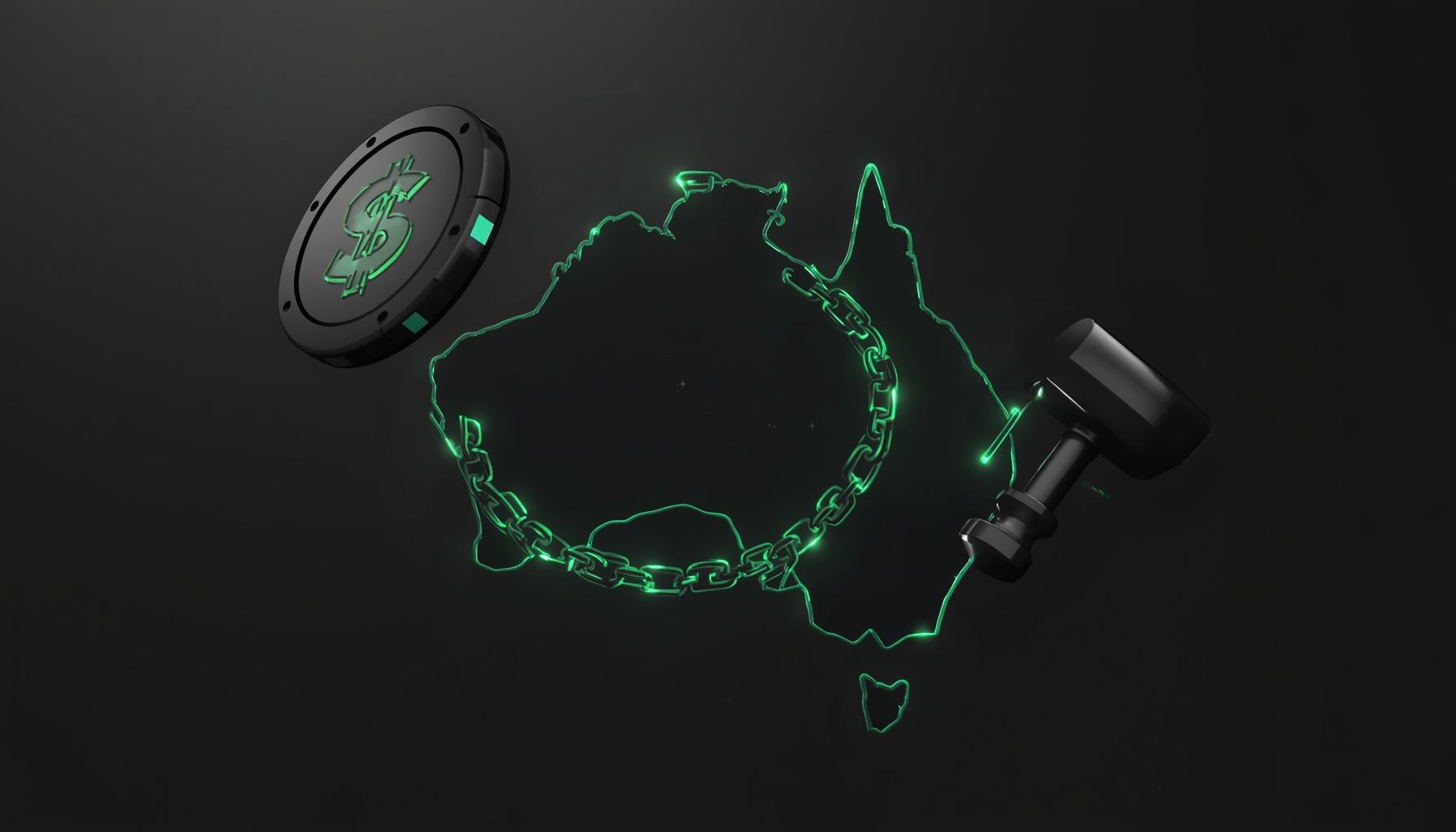
Australia’s gambling framework is anchored by the Interactive Gambling Act 2001 (IGA), which primarily governs online betting operators offering services to Australian residents. The act does not explicitly mention cryptocurrencies, leaving a gray area that regulators have begun to address through supplementary guidelines.
Key regulatory bodies
- Australian Communications and Media Authority (ACMA) – Enforces the IGA and monitors illegal offshore gambling sites.
- Australian Securities and Investments Commission (ASIC) – Oversees financial market conduct, including crypto‑exchange licensing.
- AUSTRAC – Implements anti‑money‑laundering (AML) and counter‑terrorism financing (CTF) obligations for financial service providers, extending to digital currency exchanges.
Current stance on crypto casinos
- Licensing – No Australian gambling licence currently permits the direct provision of crypto‑only casino games. Offshore operators circumvent this by holding licences from jurisdictions such as Curacao, Malta or the Isle of Man.
- AML/CTF compliance – AUSTRAC requires crypto exchanges operating in Australia to register, conduct customer due‑diligence and report suspicious transactions. Casinos that accept crypto must therefore collaborate with compliant exchanges for fund transfers.
- Advertising restrictions – The ACMA bans promotion of unlicensed gambling services. However, publicity for crypto casinos that target Australian audiences is still prevalent, often using affiliate marketing channels.
Recent developments
In 2023, the Australian Treasury released a consultation paper on the treatment of digital assets as “financial products.” While the final outcome is pending, the proposal would impose stricter licensing requirements on any entity offering crypto‑related gambling services to Australian residents.
The Financial Services Legislation Amendment (Designated Payments Services) Bill 2024 is another upcoming amendment that may broaden the definition of “payment services” to include crypto wallets, potentially allowing licensed Australian operators to integrate crypto as a payment method.
Practical advice for players
- Verify that the casino holds a reputable offshore licence (e.g., Curacao eGaming, Malta Gaming Authority).
- Ensure the exchange used to fund the crypto wallet is AUSTRAC‑registered, such as Independent Reserve or CoinSpot.
- Keep records of all deposits and withdrawals; AUSTRAC may request transaction histories from both the exchange and the casino during audits.
How to Set Up a Crypto Wallet for Casino Use
A functional wallet is the gateway to playing at crypto‑friendly Australian casinos. The process can be completed within ten minutes if the right tools are selected.
Step‑by‑step guide (without using “guide” wording)
- Choose a wallet type – Mobile wallets like Trust Wallet and Coinomi provide QR‑code scanning, making deposits to casino pages straightforward. Desktop options such as Exodus offer a richer user interface for managing multiple tokens.
- Download and install – Visit the official app store or the wallet’s website, verify the publisher’s authenticity, and follow the installation prompts.
- Create a new wallet – Select “Create New Wallet,” set a strong password, and write down the twelve‑word seed phrase on paper. This phrase is the only recovery method; storing it digitally introduces risk.
- Add the desired cryptocurrencies – Within the wallet, locate the “Add Token” option and search for BTC, ETH, DOGE or XRP. Some wallets automatically display the most popular tokens.
- Fund the wallet – Transfer Australian dollars to a regulated exchange (e.g., CoinSpot). Convert the fiat to the chosen crypto, then use the exchange’s “withdraw” function to send the funds to the wallet’s public address.
- Test with a small amount – Send AU$5 worth of the cryptocurrency to yourself or a friend’s wallet to confirm the transaction processes correctly.
- Link to the casino – On the casino’s deposit page, select the matching token, copy the casino’s deposit address, and paste it into the wallet’s “Send” field. Scan the QR code if available for added convenience.
Security best practices for Australian players
- Enable two‑factor authentication (2FA) on both the exchange and the wallet where supported.
- Keep software updated – Wallet developers release patches that address emerging vulnerabilities.
- Use hardware wallets – For large balances, devices such as the Ledger Nano S store private keys offline, reducing exposure to phishing attacks.
- Whitelist casino addresses – Some wallets allow you to add trusted addresses to a whitelist, preventing accidental transfers to malicious sites.
If you prefer non‑crypto digital wallets, see our e wallet guide for alternatives that also support rapid payouts.
Pros and Cons Compared to Traditional Methods
Evaluating digital‑currency deposits against credit cards, bank transfers and e‑wallets requires a balanced view of benefits and drawbacks, especially from an Australian perspective.
Advantages of crypto deposits
- Speed – Most tokens settle within minutes, far quicker than the 2‑5 day clearance times of bank transfers.
- Low minimums – Casinos accept deposits as low as AU$5, making gambling accessible to a broader audience.
- Privacy – No need to share personal banking details with the casino, a factor that appeals to players concerned about data breaches.
- Borderless access – Players can fund accounts from any location, bypassing restrictions imposed by Australian banks on gambling‑related transactions.
- Potential for bonuses – Some operators offer exclusive promotions for crypto users, such as a 20 % match bonus on the first Bitcoin deposit.
Disadvantages of crypto deposits
- Volatility – Rapid price swings can increase or decrease the value of a player’s balance between the moment of deposit and the time of wagering.
- Regulatory uncertainty – Ongoing legislative reviews could introduce new compliance requirements that affect how casinos handle crypto.
- Limited dispute resolution – Traditional payment methods benefit from charge‑back protections; crypto transactions are irreversible, leaving players reliant on casino policies.
- Higher fees during congestion – When networks are busy, transaction costs can become prohibitive for low‑value deposits.
Comparative table of payment methods
| Method | Typical Deposit Time | Minimum Deposit (AU$) | Average Fee (AU$) | Regulatory Clarity |
|---|---|---|---|---|
| Credit Card | 1‑2 days | 20 | 0 – 2 | High |
| Bank Transfer | 2‑5 days | 50 | 0 – 3 | High |
| E‑wallet (e.g., PayPal) | Instant | 10 | 0 – 1.5 | High |
| Crypto (BTC/ETH/DOGE/XRP) | < 30 minutes | 5 | 0.1 – 6 | Medium/Low |
The data illustrate why many Australian gamblers favour crypto for low‑stake sessions while reserving traditional methods for larger, more regulated gameplay.
Final observations
Crypto has cemented its place in the Australian online casino ecosystem. The technology offers unmatched speed and privacy, yet it carries inherent risk from market volatility and a still‑evolving regulatory framework. Players who understand how to manage wallet security, monitor network fees and stay informed about legislative changes will reap the most benefit from this payment avenue.
By choosing reputable operators, leveraging low‑fee tokens for modest deposits, and maintaining rigorous record‑keeping, Australian casino enthusiasts can safely navigate the exciting frontier of digital‑currency gambling.